

Summary
After devastating floods halted operations in 2023, Barre-based toolmaker Trow and Holden turned crisis into opportunity. Sixth-generation owner Gina Akley engaged the Vermont Sustainable Jobs Fund Business Coaching Program to chart a bold path forward, including a $5 million renovation to improve efficiency, reduce risk, and support long-term growth. The story highlights strategic planning, family business leadership, financing complexity, and a commitment to craftsmanship as the company prepares for its next century.
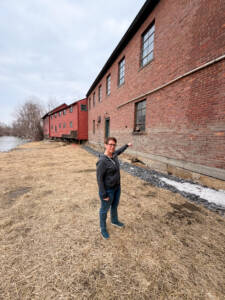
Gina Akley of Trow & Holden shows where the water line was during the devastating flooding in 2023.
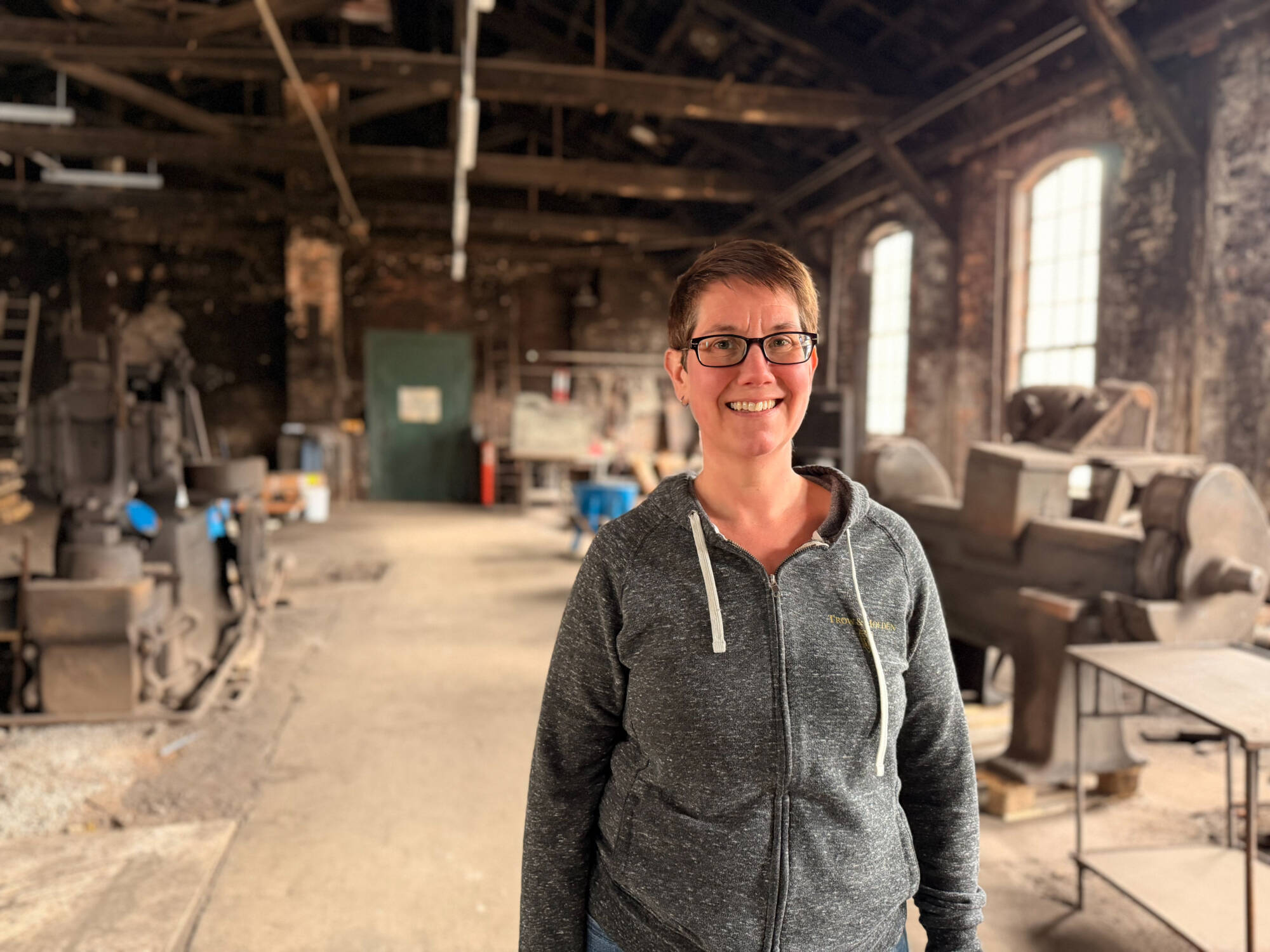
The morning after the July 2023 floods swept through Barre, Gina Akley walked into Trow & Holden’s manufacturing facility to find inches of thick mud covering the floor where her family’s stonecutting tools had been made for 135 years. Production had stopped completely. For a historic building that had weathered more than a century of Vermont seasons, a new benchmark for catastrophe had been set.
“We were all thinking, ‘What if this happens again?'” said Gina, who now owns the sixth-generation family business with her brother. “Then it almost did the following winter and summer. Having that play out got us over the hump of thinking change was not necessary.”
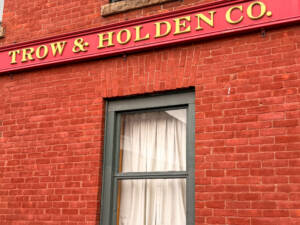
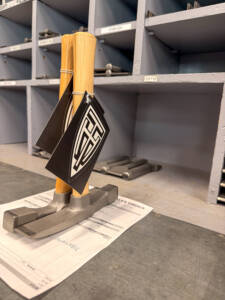
In contrast to the fast-moving tech companies of the twenty-first century, Trow & Holden has been making the same stonecutting tools, in the same location, for more than a century. Renowned by stonemasons, sculptors, and do-it-yourself stone enthusiasts across the globe, the company’s carbide hand tools, pneumatic hammers, splitting wedges, chisels, and shims are among the highest quality available, and have earned Trow & Holden a rock-solid reputation.
“We still make the exact same thing we always have–basically caveman tools–we just make them differently,” says Gina.
While the company’s longevity and reputation are enviable, it is not immune to change or global pressures, and adapting to those dynamics can be especially challenging for a 135-year old, family-run business with many toolmakers who have been there for decades.
A Crisis Becomes a Catalyst
 As the waters receded and operations resumed, Gina saw an opportunity to not only mitigate the risk of future flooding, but also to modernize and streamline production–something that had only happened a few times in the company’s history.
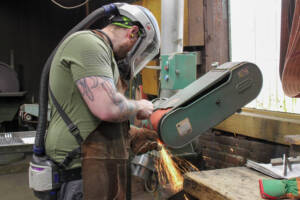
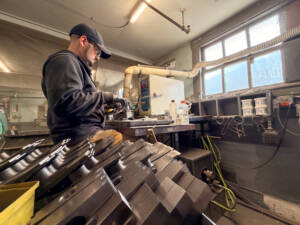
In the 1970s, her father had overseen the company’s biggest single transition, accelerating a move away from forging-based manufacturing–where raw materials were heated in furnaces and hand-shaped into tools–to the use of Computer Numerical Control (CNC) machining. For the next fifty years or so, the company made incremental investments in lean manufacturing, bringing modern equipment into the historic building when practical. Over time, however, the flow of production gradually lost the efficiencies that had been inherent to the original layout.
Gina recognized the constraints. “Labor and material costs are largely out of our control,” she said. “The only levers we can pull without compromising quality–which we will never do–are manufacturing efficiency improvements and R&D into new markets. We can’t do either of those in our current space.”
Staying Put: A Bold Vision for a Historic Building
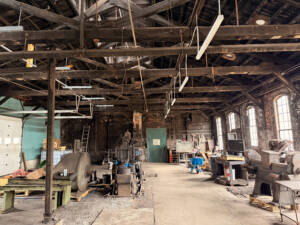 At first, they considered relocating. But as leadership toured newer facilities in the region, Gina realized they would need to refurbish any new building at considerable cost. Why not refurbish the historic building where she and her family had built Trow & Holden over many generations?
She began to envision a major renovation in which production would move from the north side of the building, where her father had installed the CNC machining centers, back into the building that held the original forge–the space not impacted by the flood. New, highly-efficient machinery would replace aging equipment. Nearby storage would ensure toolmakers had materials immediately at hand. She could train toolmakers on the new equipment while keeping current operations running at full production. And the building that had served Trow & Holden so well for 135 years would continue to be its enduring home.
The vision was clear; the path to get there was not.
The $5 Million Question
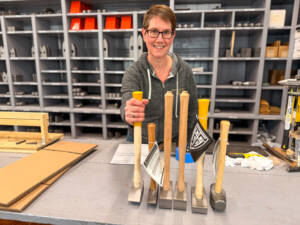
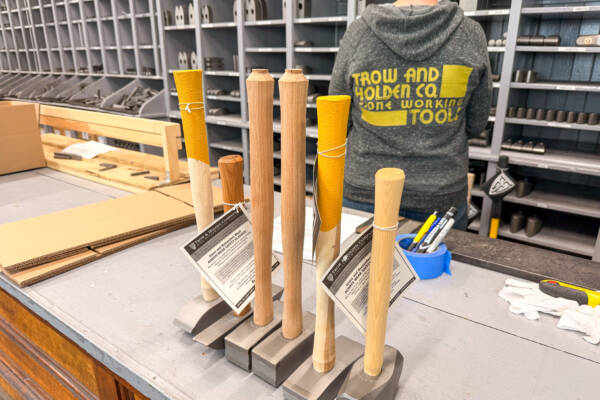
Gina Akley shows off some of Trow & Holden’s tools.
Gina estimated the renovation would cost the company about $5 million–a transformational investment for a company of Trow & Holden’s size. “We knew what we wanted to do, but I needed to be very strategic. That level of change, you get one shot. If you mess it up, you lose buy-in and you lose a lot of money.”
Family dynamics added layers of complexity. Gina’s parents, who have since retired, were still actively involved in running the business at the time. “I’ve made strategic plans,” she said, “but never with my brother and my parents. When family is involved, even the smallest things can be very emotional.”
Realizing they were at a pivotal transition point in the company’s history, she turned to the Vermont Sustainable Jobs Fund (VSJF) business coaching program for support and was connected with VSJF coaches, Peter Cole and Lawrence Miller, who would help guide the company through its most ambitious transformation in decades.
Building a Roadmap
Gina was firm in her decision to renovate the existing building rather than move. “I assumed Peter and Lawrence would want me to consider all the options,” she said, “but the first thing they said was, ‘No, it’s okay to know what you want. Let’s figure out how to get you there.”
From that starting point, Peter worked with Gina and the leadership team, helping them navigate family dynamics, establish an advisory board, and lay out a strategic plan grounded in shared goals and values. Meanwhile, Lawrence helped sort out a financing strategy and detailed cash flow projections. Together, they balanced financial rigor with human-centered leadership.
“We essentially took a mature business and put it into start-up mode,” said Lawrence. “Gina had a strong vision, but she was willing to pause– to test every hypothesis and find the holes–until she had a plan that worked.”
Lawrence helped the team think strategically about various types of capital, matching each funding source to its most effective use. A line of credit, he explained, is appropriate for working capital, while long-term debt works best for building improvements. At the same time, he and Gina worked on a very granular level to really understand cash flow and operational needs.
“A plan can look great on paper and still fail,” said Gina. “How your books look and where your cash flow actually is in your business can be two very different things. Lawrence has been a hugely valuable resource; he brings a very firm approach, but is creative around it.”
While Gina and Lawrence worked through financial spreadsheets, Peter laid the foundation for a strategic planning process that addressed the human side of business transformation.
 “Navigating family dynamics requires a mix of coaching and consulting,” says Peter, who takes a holistic approach. “Generational transitions are one of the most difficult challenges. The identity shifts from one generation to the next, the expectations that sometimes don’t evolve from a child-to-adult relationship. I coach the whole human being, not just the business executive.”
He met with leadership regularly, facilitating discussions about roles and responsibilities, helping family members navigate emotional conversations, and working with Gina to establish an advisory board of experienced CEOs who understand the challenges of major capital investments, modernization efforts, and workforce development.
“It’s always our intention to leave leadership in the hands of a great advisory board,” Peter explained. “It’s an opportunity to get support from other CEOs, people who understand what it means to invest millions of dollars into building modernizations, sales and marketing, workforce challenges. They are peer coaches who can pick up where Lawrence and I leave off.”
Looking Forward While Honoring Tradition
With a strategic plan in place, a thoroughly vetted cash flow spreadsheet, and a new advisory board providing guidance, Trow & Holden is now moving confidently toward a renovation that will modernize the company, improve efficiency by an estimated 30 percent, and protect the business from future flooding. Construction is scheduled to begin in 2026.
“Gina is doing a once every 50 to 75 year kind of reset, not just for her own professional life, but for the next generation of family and employees as well,” said Lawrence.
Within that transformation, Gina is determined to preserve the qualities that have set Trow & Holden apart from the beginning: uncompromising quality and personalized customer service.
“I don’t ever want to be a shop where robots make everything, even if that’s the most efficient. You’re still going to call and get me or another person. Toolmakers will still make beautiful tools, even if they are immediately taken out of the box and smashed into rocks.”
To help ensure institutional memory is retained through this transition, and any to come, Gina is working with the company’s most senior toolmakers to document the practices and processes that have been honed to perfection through the generations.
“Just like Ben & Jerry aspired to make the best ice cream, Gina aspires to make the best tools,” said Peter. “It’s a world-class business. That idea is really important to a lot of Vermont businesses; it’s one of Vermont’s prime areas of strength—companies that compete on quality and craftsmanship, not just price.”
For Trow & Holden, that commitment to excellence has sustained the business through six generations. Now, with careful planning, strategic coaching, and a bold vision for the future, it’s positioned to thrive for generations to come. trowandholden.com
About VSJF’s Business Coaching Program
The Vermont Sustainable Jobs Fund provides tailored, high-touch coaching and advising to entrepreneurs and small business owners, as well as free Business Sense training modules, which are available online. Committed to advancing profitability, job creation, and sustainable job development in Vermont, funding for the coaching program is supported by client fees, the Vermont Agency of Agriculture, Food and Markets and the Vermont Housing & Conservation Board’s Farm & Forest Viability Program.