

Built from the Forest
Conversations with Forest Business Accelerator Entrepreneurs
Built from the Forest highlights founders who have participated in the Forest Business Accelerator and are building businesses rooted in the future of the forest economy. These entrepreneurs are transforming forest-based materials into high value products, technologies, and solutions that strengthen regional supply chains and expand sustainable manufacturing.
This conversation features Winslow Robinson, PhD, Founder & Design Researcher at Fable Forestry, a 2025 Forest Business Accelerator company, developing nature intelligence tools that help detect invasive species earlier, improve forest management decision-making, and support healthier ecosystems across the Northern Forest region.
Q and A with Winslow Robinson, PhD, Founder & Design Researcher, Fable Forestry
Q: Tell us about your company – what inspired you to start it, and what problem are you solving?
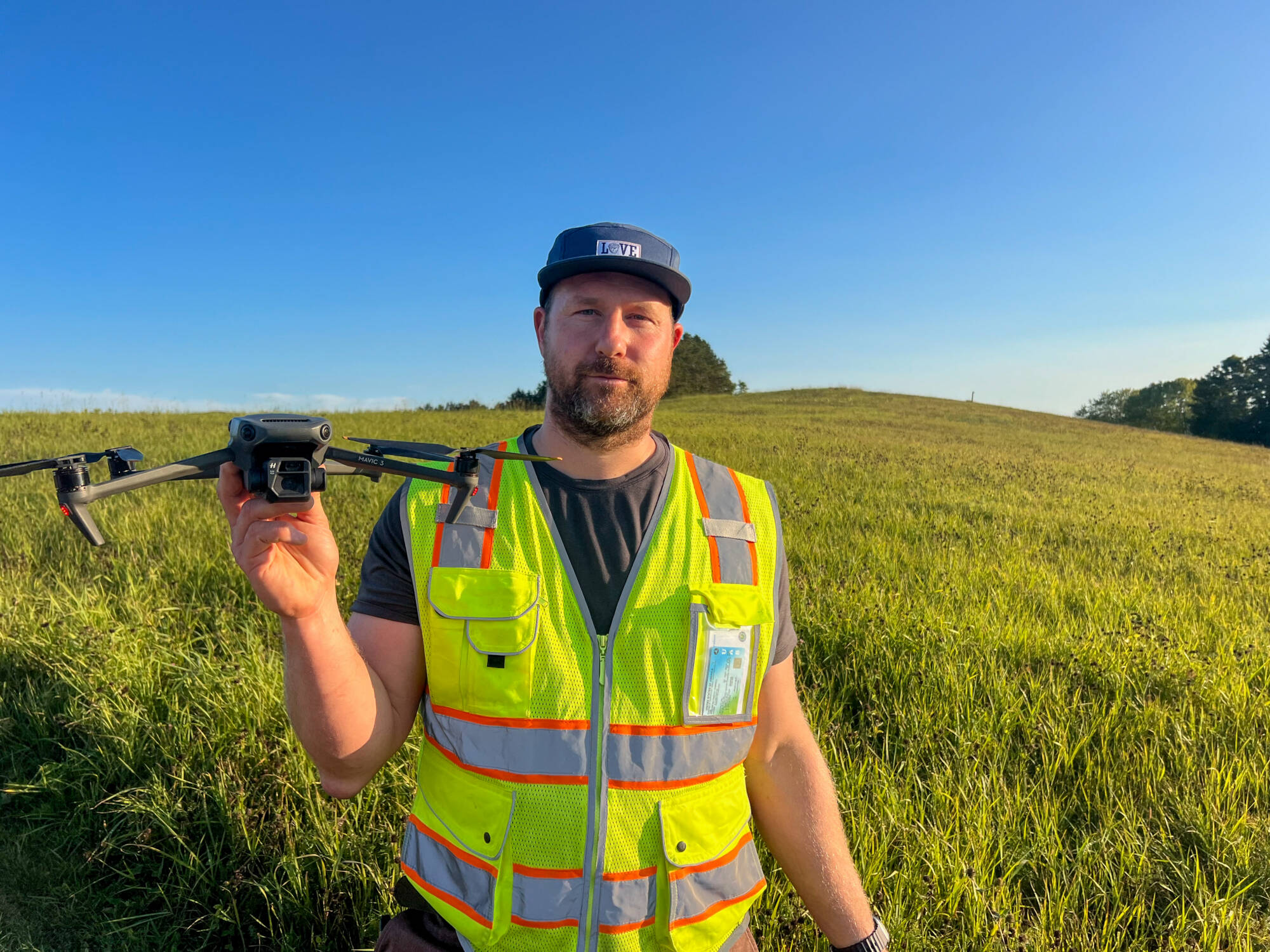
A: Fable Forestry builds nature intelligence for invasive species early detection and rapid response. I spent 20 years in behavioral science, and I also farm, keep bees, and fly drones commercially – so I kept running into the same problem from two directions. The tools to map invasive species like Japanese knotweed and Oriental bittersweet exist, but the field data underneath them is too sparse to act on. The bottleneck isn’t that people don’t care. It’s friction. Pulling out a phone, opening an app, framing a photo, tagging a location – that’s enough friction to stop most observations from ever getting recorded. So, we removed it! Our Naughtweed platform lets someone press a single IoT button to log a geolocated, timestamped invasive species observation in 0.1 seconds. In our first two months of the beta launch, 40 users generated over 30,000 records across the US with a daily commitment of less than two seconds; these are the data that will support the coming wave of scalable robotic intervention for invasive species management.
Q: What’s unique about your product or service, and how does it contribute to forest industry innovation or sustainability in Vermont and the Region?
A: Two things set us apart. First, the capture method – a button press instead of an app – which is why our data density is orders of magnitude higher than comparable tools. Second, the model underneath it: contributors own their observations and can earn a share when that data is licensed, so the people doing the detecting have a stake in it. For the Northern Forest region – Vermont, New Hampshire, Maine, New York – that means dense, current, ground-truthed maps of where invasives actually are, which is what land trusts, municipalities, and remediation crews need to prioritize work. Detection isn’t the end goal – it’s how we generate qualified demand for remediation and keep working forests healthy.
Q: What stage is your business at, and what milestones are you most proud of so far?
A: We’re early but with some traction. We’ve got a working platform, active field-testing collaborations (domestic and international), and a co-founding team spanning former NASA engineering and Sonos go-to-market leadership. The proof point I keep coming back to is how fast we can encode offline invasive data with one button – that’s the clearest demonstration that the friction thesis is solid. We’ve also been invited to the TEDx stage this November and to present at the NAISMA annual conference this fall, which tells me the invasive species community sees the same gaps we do.
Q: How has participating in the Forest Business Accelerator impacted your company or your thinking as a founder?
A: That training has been foundational to how we are considering our go-to-market and unit economics of invasive management. We entered into the Accelerator ready to invest in expensive robotic dog systems for invasive tick detection, and left with a clear-eyed understanding that robotic dogs make some people uncomfortable (i.e., a business non-starter). Instead, we completed the program with a new opportunity to build the nature intelligence context for ‘invasive species X robotics’, creating the cash flow to meet the robotics industry as it matures both technologically and socially.
Q: What excites you most about the future of your company and the industry?
A: The future is subsurface and international. On the technology side, the most defensible complement to our surface records is eDNA detection in soil and water – being able to confirm what’s below ground, not just what’s visible. On the market side, invasive species are a global problem, and we’re already in conversations that stretch to Sweden and the EU. But what excites me most is simple: proving that if you remove the friction, ordinary people generate extraordinary environmental data. That reframes what’s possible for monitoring anything in the natural world.
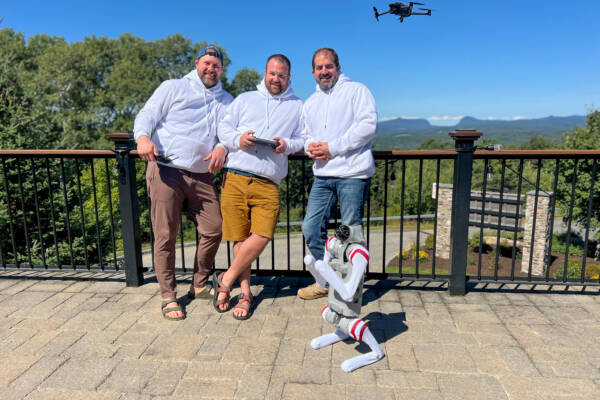
The Fable Forestry team at the 2025 Forest Business Accelerator. Photo by Kelly Nottermann.
Learn More
- Website: https://fableforestry.com
- LinkedIn: https://www.linkedin.com/in/winslowrobinson
The Forest Business Accelerator helps entrepreneurs develop innovative products, technologies, and services that strengthen the forest economy. Learn more about the 2026 cohort.